


Kenya Detects Second Ebola Case in Quarantine—Now the Regional Response Faces Its Test

Kenya has confirmed a second case of Bundibugyo Ebola virus disease, a close family member of the country’s first patient. The 39-year-old was already in quarantine and being monitored when symptoms appeared, Kenya’s health ministry said, and was isolated for care. That sequence points to a response catching a known contact—but the work of tracing everyone exposed is not complete.

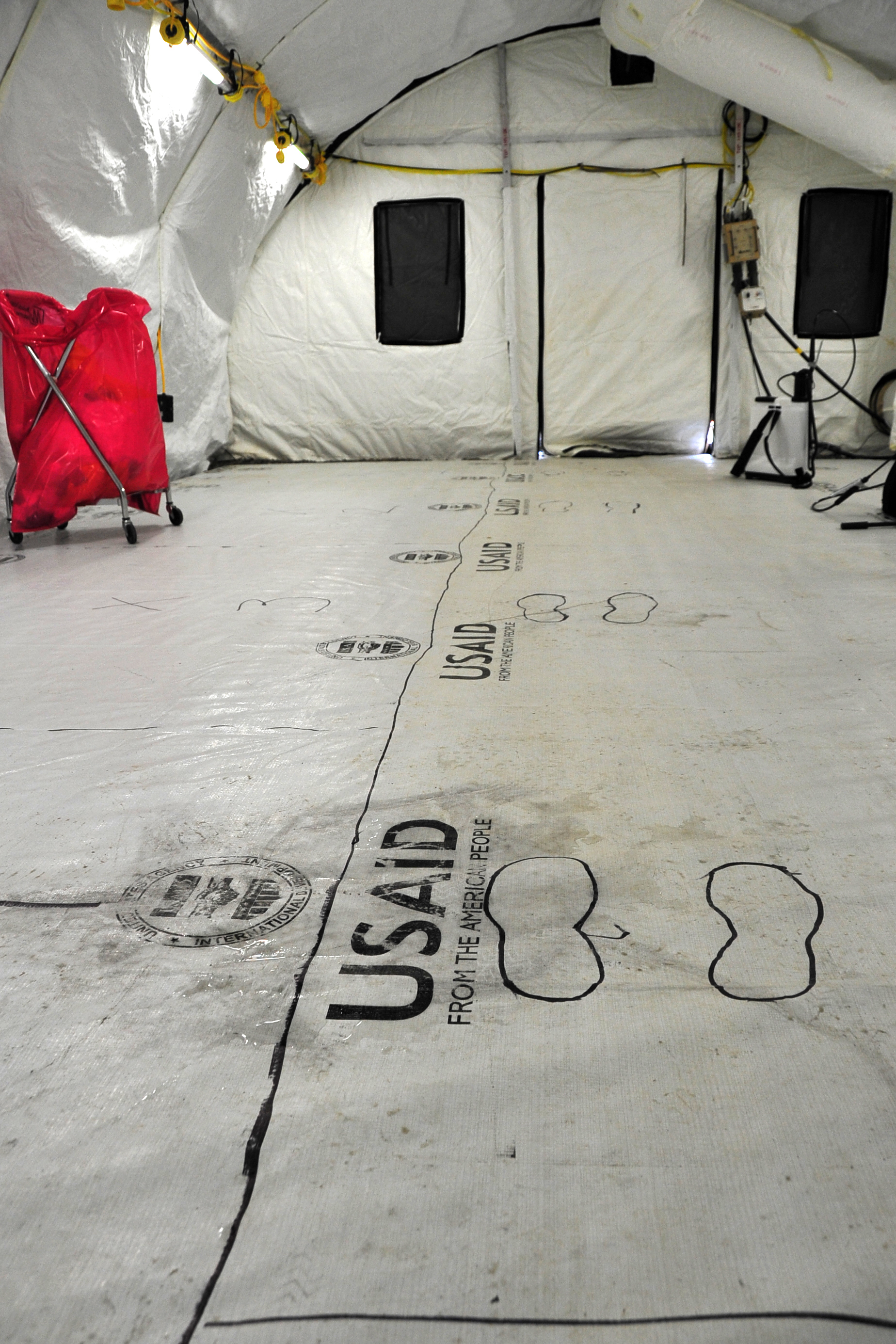
Archive image: a medical-worker treatment unit in Monrovia, Liberia, November 2014. U.S. Army photo by Sgt. 1st Class Nathan Hoskins via Wikimedia Commons; public domain. Not a current scene in Kenya. Source: https://commons.wikimedia.org/wiki/File:Ebola_treatment_unit_for_medical_workers_to_open_141104-A-CH600-030.jpg
The ministry said there was no evidence of wider community spread at the time of its announcement. Reuters reported that 113 of 128 identified contacts had been traced: 108 were in quarantine and five were outside Kenya. Fifteen contacts were still untraced. Those figures describe the investigation at that update, not a final tally.
Quarantine buys time; borders still matter
The first patient had traveled from the Democratic Republic of Congo through Uganda before arriving in Nairobi on 3 October, Reuters reported. The patient died on 5 October. Kenya’s case has prompted scrutiny of screening along regional travel routes, while health officials have expanded screening at Nairobi’s airport and intensified contact follow-up.
The second case therefore offers two lessons at once. Monitoring a known contact helped identify illness after symptoms began, allowing isolation. At the same time, the remaining untraced contacts and the first patient’s cross-border journey show why surveillance has to extend beyond the quarantine list and beyond national borders.

Bundibugyo outbreak cases and deaths in the DRC through 5 October 2026; the chart does not include Kenya’s new cases. Brown University School of Public Health via Wikimedia Commons, CC BY 4.0. Source and license: https://commons.wikimedia.org/wiki/File:Bundibugyo_Cases_deaths_2026_10_05.png
A regional outbreak, a local test
The World Health Organization’s 6 October update recorded 8,728 confirmed cases and 4,205 deaths in the DRC outbreak to that date. That context is not a measure of spread in Kenya; the two countries’ figures should not be conflated. WHO’s update predates the second Kenyan case.
The immediate indicators to watch are whether the 15 outstanding contacts are located, whether any additional cases emerge, and how quickly neighboring countries share information on travelers and contacts. The second infection was found within quarantine. Sustaining that advantage will depend on transparent updates, careful contact tracing and coordination across the region.
Sources: Reuters, 14 October 2026 — https://www.reuters.com/business/healthcare-pharmaceuticals/kenya-reports-second-ebola-case-family-member-first-patient-2026-10-14/ ; WHO, 6 October 2026 — https://www.who.int/emergencies/disease-outbreak-news/item/2026-DON619








Comments