


IShowSpeed brings Nkrumah to cinemas. Why is Obama on the credits?

IShowSpeed is bringing a remarkable story of African liberation to a new generation. But the documentary he is helping take to theaters comes with a contradiction in its credits: Barack and Michelle Obama are executive producers of a film about Kwame Nkrumah, one of the most outspoken opponents of Western domination in twentieth-century Africa.
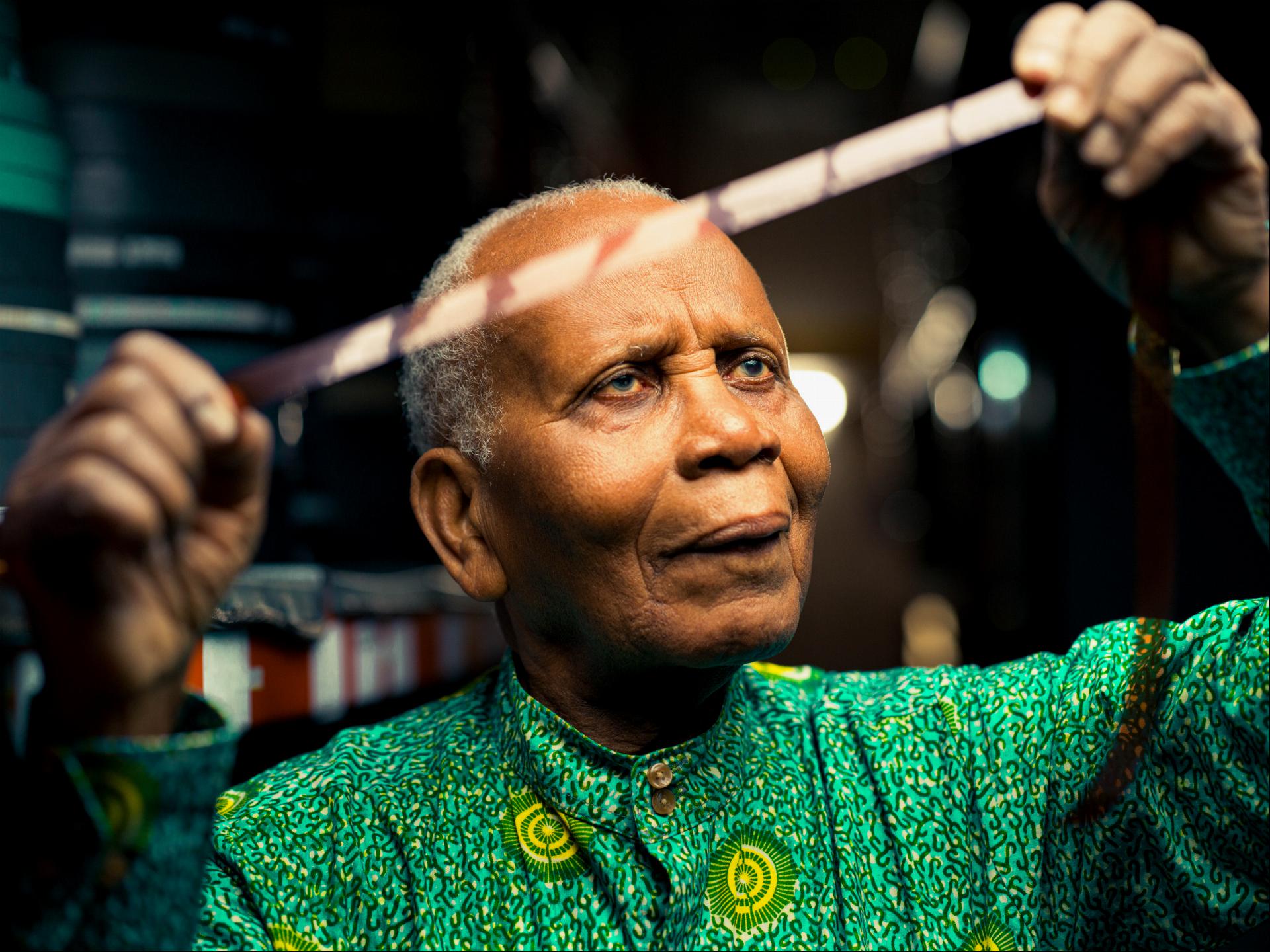
The Eyes of Ghana, directed by two-time Oscar winner Ben Proudfoot, follows veteran Ghanaian cameraman Chris Hesse as he and filmmaker Anita Afonu work to save and repatriate an extraordinary archive of more than 1,000 films documenting Ghana's independence struggle and the wider movement for African liberation. The film premiered in 2025. On October 15, 2026, its producers announced that streamer IShowSpeed, credited under his real name Darren Watkins, had joined as a producer to help bring it to American and Canadian theaters for a one-night event on October 28.
That is a worthwhile use of Speed's enormous platform. These images belong to a history too often filtered through European and American newsreels. Recovering the work of a Ghanaian filmmaker, and bringing it to young people who might otherwise never hear of Nkrumah, is something to celebrate.

Archival still from The Eyes of Ghana, via OkayAfrica / Breakwater Studios.
A revolutionary history, with Obama in the credits
Nkrumah did more than lead Ghana to independence from Britain in 1957. He argued that formal sovereignty meant little if African countries remained economically subordinate to former colonial powers. He advocated industrial development, continental unity and resistance to what he called neocolonialism. In 1965, his book Neo-Colonialism: The Last Stage of Imperialism named the United States as a central force in the system he opposed.
Washington did not take that criticism lightly. A November 1965 State Department cable recorded an official protest over Nkrumah's book and the refusal of a large Ghanaian food-assistance request. The year before, U.S. officials had already discussed his political vulnerability. In a March 1965 meeting, CIA Director John McCone and U.S. diplomats discussed specific Ghanaian military and police figures plotting his overthrow.
When soldiers and police deposed Nkrumah on February 24, 1966, U.S. officials greeted the result enthusiastically. In a March memorandum to President Lyndon Johnson, White House adviser Robert Komer called the coup a 'fortuitous windfall' and described the replacement regime as strongly pro-Western. Official U.S. histories say Washington knew about the plots but do not establish that it directly organized the coup. The distinction matters. What is documented beyond doubt is the American government's opposition to Nkrumah's political project and satisfaction at his removal.
Obama was a child when that coup took place; he had no role in it. The point is not to transfer responsibility for Johnson-era policy onto him. It is that The Eyes of Ghana concerns a liberation movement the U.S. establishment resisted, while a former leader of that establishment now enjoys a prominent position in telling its story.
Obama's own record makes the contradiction sharper
In a 2009 speech to Ghana's Parliament, Obama praised African self-determination but said the future would not be determined by 'giants like Nkrumah and Kenyatta.' He emphasized domestic institutions, governance and responsibility within Africa. These are not inherently illegitimate priorities. But the formulation also shifted attention away from the external forces Nkrumah spent his life confronting: unequal trade, foreign economic control and military interference.
Two years later Obama backed U.S. military action in Libya, first under an American-led coalition and then under NATO command, officially justified as protecting civilians during an uprising against Muammar Gaddafi. The intervention contributed to the government's overthrow. Libya subsequently endured years of fragmentation and conflict; weapons from its stockpiles spread beyond its borders, including into the Sahel.
Obama later called the failure to plan for Libya after the intervention the worst mistake of his presidency, although he continued to defend the intervention itself. For critics of Western intervention in Africa, that distinction is precisely the problem: African societies absorb the consequences of military decisions taken in Washington, Paris and London, while the officials responsible can later present themselves as patrons of African cultural memory.
His administration also conducted drone strikes in Somalia. Human Rights Watch reported that the United States provided too little public information about civilian casualties from its operations. These policies deserve scrutiny alongside the polished language of partnership and shared heritage.
Whose eyes, whose history?
Executive-producer credit does not prove that Obama personally controlled the script, rewrote the history or censored Nkrumah's politics. Nor is there evidence that IShowSpeed joined the project to sanitize them. To suggest otherwise would be speculation. The documentary's Ghanaian contributors, particularly Anita Afonu and Nana Adwoa Frimpong, have serious creative and historical stakes in the project and should not be treated as accessories to American celebrity names.
Still, who finances and distributes African history matters. As African critic Wilfred Okiche argued while reviewing the 2025 Toronto festival lineup for The Continent, African stories too often need Western institutional backing to reach international audiences. The paradox is especially stark for a film about a leader who wanted Africans to own not only their states, but the means of telling their own stories.
The right response is neither a boycott of Hesse's work nor a free pass for Obama's record. Viewers should see the film, encounter Nkrumah's ideas, support Ghanaian film preservation and ask what happens to those ideas when the former president of a global superpower helps package them for mass consumption.
Speed's involvement could introduce millions of young people to anti-colonial history. But the history should be allowed to speak in its full political voice. Ghana's struggle was not merely an uplifting national coming-of-age story. It was a challenge to the economic and geopolitical power of the West.
A documentary can recover the images of liberation. The harder task is refusing to erase what liberation was fighting against.
Sources and image credits
Breakwater Studios/Higher Ground theatrical announcement, October 15, 2026, reported by BroadwayWorld: https://www.broadwayworld.com/bwwtv/article/Photos-THE-EYES-OF-GHANA-to-Screen-Nationwide-with-IShowSpeed-as-Producer-20261015
Film at Lincoln Center, The Eyes of Ghana synopsis and production credits: https://www.filmlinc.org/films/the-eyes-of-ghana/
U.S. Department of State, March 1965 discussion of plots: https://history.state.gov/historicaldocuments/frus1964-68v24/d251
U.S. Department of State, 1966 Komer memorandum: https://history.state.gov/historicaldocuments/frus1964-68v24/d260
U.S. Department of State, November 1965 diplomatic cable about Nkrumah's book: https://history.state.gov/historicaldocuments/frus1964-68v24/d256
Barack Obama's 2009 speech to Ghana's Parliament: https://obamawhitehouse.archives.gov/blog/2009/07/11/a-new-moment-promise-africa
NATO, Libya operation chronology: https://www.nato.int/en/what-we-do/operations-and-missions/nato-and-libya-february-october-2011
Obama on Libya's aftermath (Associated Press via PBS): https://www.pbs.org/newshour/politics/white-house-blame-to-share-for-failed-libya-aftermath
Human Rights Watch, Somalia operations and civilian-casualty transparency: https://www.hrw.org/world-report/2016/country-chapters/somalia
The Continent, September 20, 2025, Wilfred Okiche on African cinema and financing: https://www.thecontinent.org/_files/ugd/287178_53d3d5863705454cac016a89d52e57af.pdf?index=true
Lead photo: Chris Hesse in The Eyes of Ghana, film publicity still via Calgary International Film Festival / Breakwater Studios, reproduced for editorial commentary. Archival film still: Kwame Nkrumah with a young student, via OkayAfrica / The Eyes of Ghana, reproduced for editorial commentary.





Comments