





Iran names new defence minister after U.S. and Israel killed his predecessor

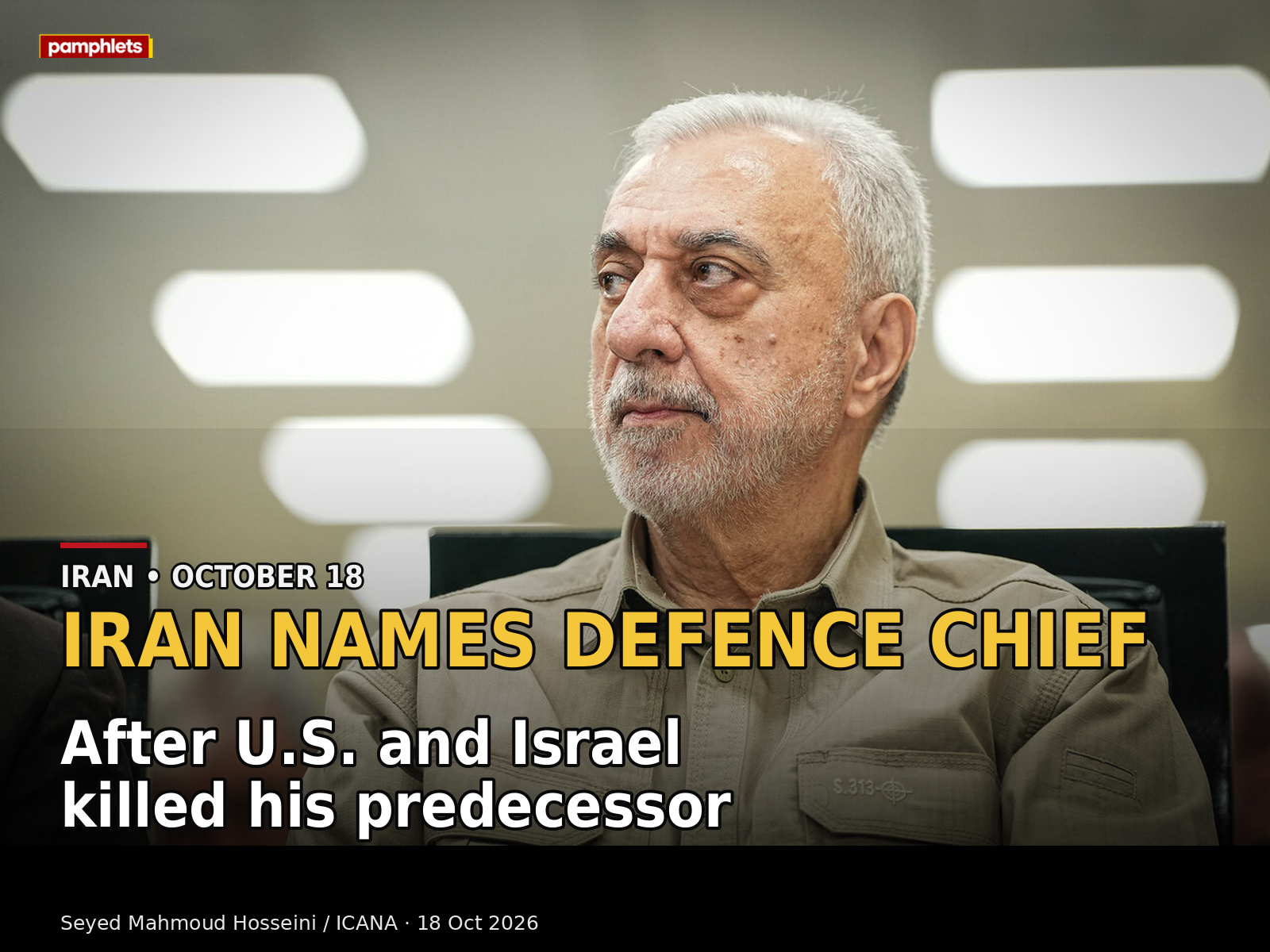
Mehrdad Akhlaqi Ketabchi at the October 18, 2026 confidence-vote proceedings. Photograph: Seyed Mahmoud Hosseini / ICANA.
Iran's parliament approved Mehrdad Akhlaqi Ketabchi as defence minister on Sunday, October 18, with 237 votes in favour and 15 against, according to the legislature's own news service. The vote gives the country's defence industries a confirmed minister after months of interim leadership. [1] [8]
Akhlaqi takes over from acting minister Majid Ebn al-Reza, who assumed the role after U.S.–Israeli strikes killed Defence Minister Aziz Nasirzadeh in February. Sunday's appointment places a veteran of Iran's aerospace and missile industries in charge of defence production and procurement, Reuters reported. [2]
The appointment is an institutional response to a war whose consequences are still being managed. Iran is putting a confirmed official at the head of an office whose previous holder was killed in the opening U.S.–Israeli strikes, an essential part of the political context for Sunday's vote. [8]
A vote after months of interim leadership
The confidence session took place by video conference. Parliament's National Security and Foreign Policy Committee and its Industries and Mines Committee presented assessments before supporters and opponents spoke and Akhlaqi defended his programme, according to Tasnim's account of the proceedings. [3]
The parliamentary report also recorded an appeal from deputy speaker Hamidreza Haji-Babaei to improve conditions for armed-forces personnel, particularly retirees. That puts livelihoods alongside weapons procurement among the public expectations facing the incoming minister. [1]
Akhlaqi set out plans to increase defence production, strengthen research and reorganise the ministry around current security needs. He also promised to reinforce Iran's regional allies, which Tehran describes as the resistance front, Anadolu reported. [4]
He warned lawmakers that another U.S.–Israeli attack would bring a response he called “surprising and extensive.” He said Washington and its allies would bear responsibility for the regional and international consequences of renewed military action. [4]
Sanctions are part of a much longer confrontation
President Masoud Pezeshkian's support for the nominee came with an unusually stark qualification. Addressing parliament, he said he hoped Akhlaqi would remain alive and claimed that the nominee was on a U.S. assassination list, Anadolu reported, citing ISNA. Pamphlets has not independently verified the existence of that list. [5]
What is publicly documented is Washington's long campaign to restrict Akhlaqi's work. A January 2016 U.S. Treasury announcement named him, using the spelling Mehrdada Akhlaghi Ketabachi, as director of Iran's Aerospace Industries Organization and designated him for acting on its behalf. [6]
The same Treasury notice described the organisation as subordinate to Iran's defence ministry and responsible for managing the country's ballistic-missile programme. It also recorded that Washington had already designated Akhlaqi in 2008 for his role at Shahid Bakeri Industrial Group. [6]
Treasury's original July 2008 statement identified him as the group's head, with responsibility for its daily operations and equipment procurement. The action used Executive Order 13382, which permits asset freezes and restrictions on dealings with designated people and organisations under U.S. jurisdiction. [7]
Those records establish the stated basis of the American measures. They also show that the new minister's confrontation with Washington predates the current war by many years. His appointment connects that earlier industrial struggle to the task of rebuilding leadership after a minister's death. [7] [8]
What the appointment changes
Sunday's vote places a confirmed minister above an industrial apparatus already operating under sanctions and dealing with the loss of its previous leadership. Akhlaqi's programme brings production, research and institutional organisation together. How far he can carry it out remains an open question.
For Iran, the stakes extend beyond official declarations about retaliation. Institutions have to keep functioning, workers and retirees have material needs, and another round of strikes could impose fresh losses. Sunday's vote records a state continuing to organise after the killing of a senior official. Washington and Israel can apply pressure; they do not get to choose whom Iran appoints.



Comments