




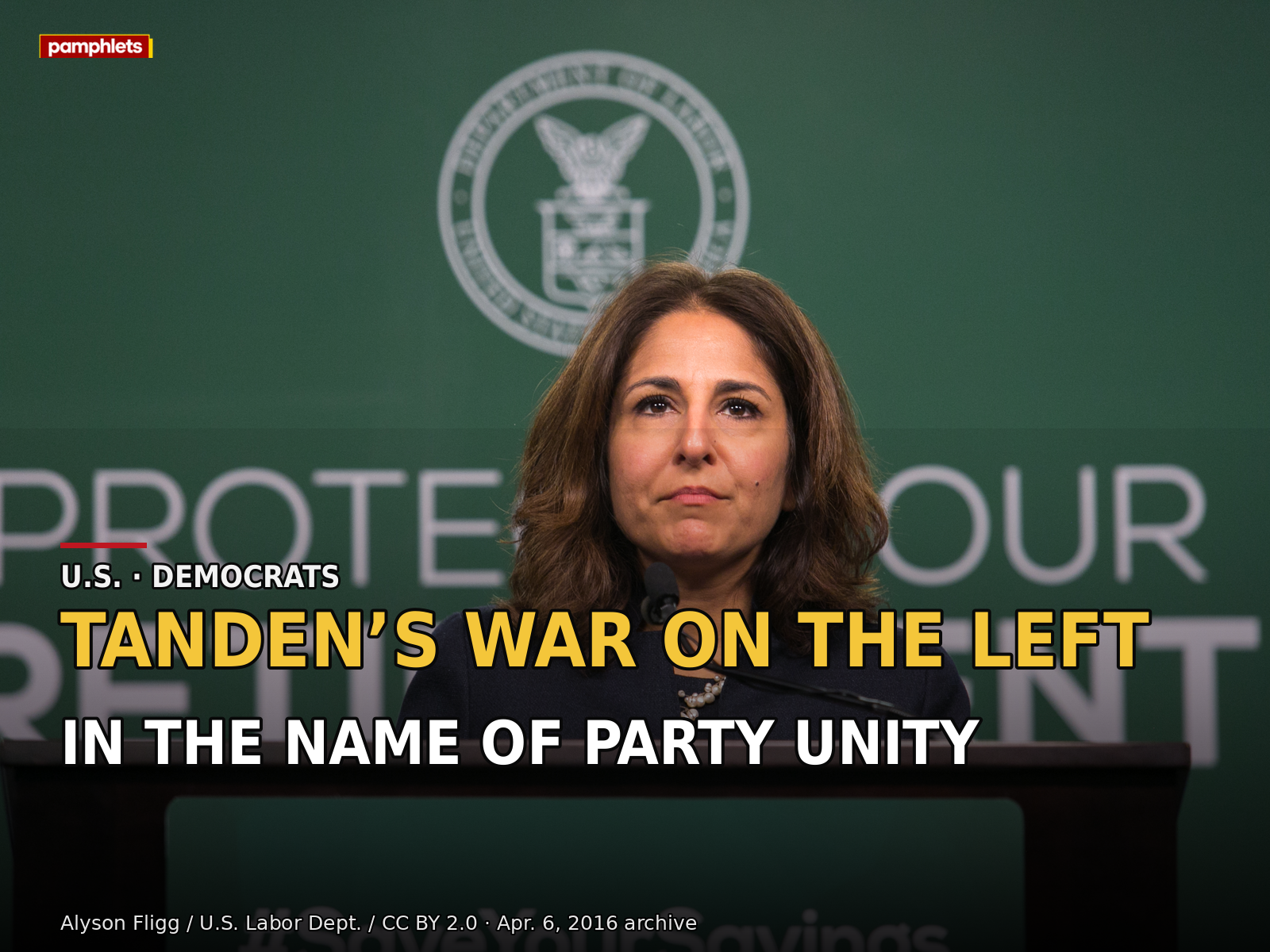



Neera Tanden wages war on the left — and calls it party unity

OPINION
Neera Tanden’s recurring battles with the left expose a basic contradiction in establishment Democratic politics: the people who demand unity from everyone below them reserve the right to keep attacking the people they expect to fall in line. Socialist media, progressive candidates and critical journalists become permanent defendants. The party’s professional gatekeepers remain the judges.
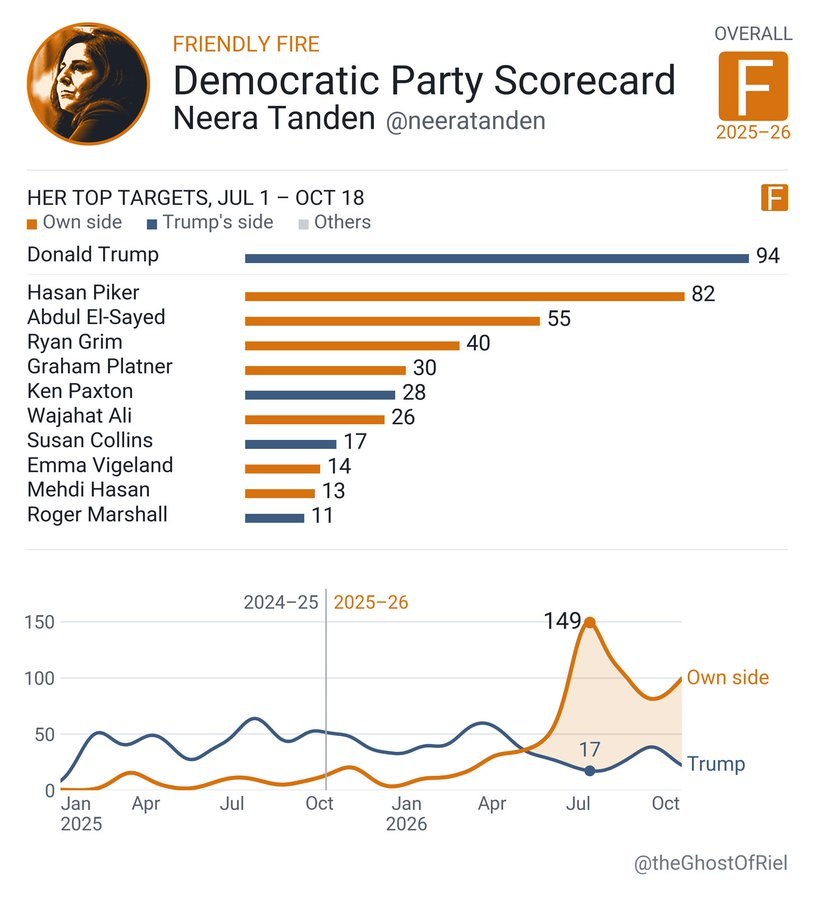
A scorecard puts the pattern in focus
The supplied scorecard, credited to @theGhostOfRiel and covering July 1 through October 18, lists 82 attacks on Hasan Piker, 55 on Abdul El-Sayed and 40 on Ryan Grim, compared with 94 on Donald Trump. It also lists Graham Platner, Wajahat Ali, Emma Vigeland and Mehdi Hasan among Tanden’s targets. Those figures are the creator’s tally; the image does not include the underlying post archive or counting method.
Tanden’s current public exchanges show the feud continuing. In an October 18 post, she introduced a clip with “Hasan Piker talking about me (for the 7000th time).” That parenthetical is her rhetoric, not a measured count. A separate post called it “kinda pathetic” that the account sharing the clip had blocked her.
The political effect is easy to recognize. Every argument about whether a progressive candidate may associate with a socialist commentator shifts attention from what that candidate proposes to which people the establishment permits into the conversation. A demand for a healthcare system, a challenge to militarism or a criticism of Israeli policy can be displaced by another loyalty test.
Netanyahu got a seat at the table
The contrast exposes the priorities at work. A right-wing head of government could be welcomed into a forum devoted to strengthening a strategic partnership. Critics of that partnership encountered arguments over whether their criticism belonged inside the institution at all. In our assessment, this is gatekeeping in defense of the existing foreign-policy order.
The left owes the establishment no silence
Tanden’s defenders can argue that criticism within a coalition is legitimate. It is. The same principle protects the left’s right to scrutinize her record, reject her political judgments and challenge the authority of the institutions she represents. Unity becomes a mechanism of control when only one faction is expected to practice restraint.
A coalition capable of confronting the right needs room for people who challenge concentrated wealth, organize workers, demand universal public services and oppose the use of American power to sustain domination abroad. Treating those commitments as permanent liabilities gives the establishment a veto over the very forces that could change its politics.
This is why Tanden’s feud with the left has significance beyond the personalities involved. A powerful policy institution can help develop a popular alternative. Its leadership can also spend political capital narrowing the range of people and ideas deemed respectable. The public is entitled to judge which activity it sees.
The scorecard’s “F” is an editorial verdict. The deeper charge rests on a public record: coalition-building language alongside sustained conflict with the left, and an institutional history that welcomed Netanyahu while drawing pressure over criticism of Israel. Pamphlets’ judgment is that this form of leadership weakens the popular opposition it claims to serve. The left should organize with the confidence to challenge it.








Comments