


Noboa's war on democracy: Courts, protests and press under fire

Ecuador's president Daniel Noboa presents himself as the strong hand needed to defeat organized crime. But under the cover of that emergency, his government has steadily tested the limits of constitutional authority, turned troops against protesters, confronted judges and faced accusations of using state institutions to squeeze critical media.
The latest warning came on October 9, when Expreso, one of Ecuador's long-established newspapers, ended its print edition after 53 years. Its publisher, Granasa, blames an accumulation of official financial, administrative and judicial pressure. Those allegations remain contested, but Ecuadorian press-freedom organization Fundamedios has documented the case as a threat to independent journalism.
Rule by emergency
Since January 2024, Noboa has repeatedly invoked an 'internal armed conflict' to justify military deployments and exceptional powers. The danger is not imaginary: Ecuador has suffered a devastating expansion of organized criminal violence. The political question is whether an emergency response should permit the president to govern without the ordinary restraints of law.
Human Rights Watch's 2026 World Report says Ecuador's security strategy failed to contain the violence and generated growing allegations of serious abuses, including arbitrary detentions, mistreatment, disappearances and extrajudicial killings. By September 2025, homicides had increased by roughly 40 percent compared with the previous year, according to government figures cited by the organization.
In June 2025, Noboa's allies passed the National Solidarity Law and an Intelligence Law. Human Rights Watch warned that the measures gave the executive sweeping powers, threatened safeguards against unlawful lethal force and opened the door to intelligence collection without proper judicial authorization. Ecuador's Constitutional Court later struck down some provisions. The confrontation exposed a fundamental division: the executive wanted a freer hand; the constitutional system was designed to stop that freedom from becoming arbitrary power.
The court became a political target
Instead of treating judicial review as part of democratic government, Noboa's administration mounted public pressure against the Constitutional Court. Senior officials described judges as 'enemies of the people,' according to Human Rights Watch, which also documented government-organized demonstrations against the court.
The United Nations' human-rights leadership and the Inter-American Commission on Human Rights raised concerns over threats to the judges' independence and safety. In September 2025, Noboa tried to initiate a referendum on convening a constituent assembly without first completing the constitutionally required review. Electoral authorities eventually sent the proposal to the court, which permitted the vote to proceed.
That is what institutional erosion looks like before an outright breakdown: a president attacks the referee, insists that legal limits obstruct the popular will, and treats independent scrutiny as sabotage.
Protesters are not enemy combatants
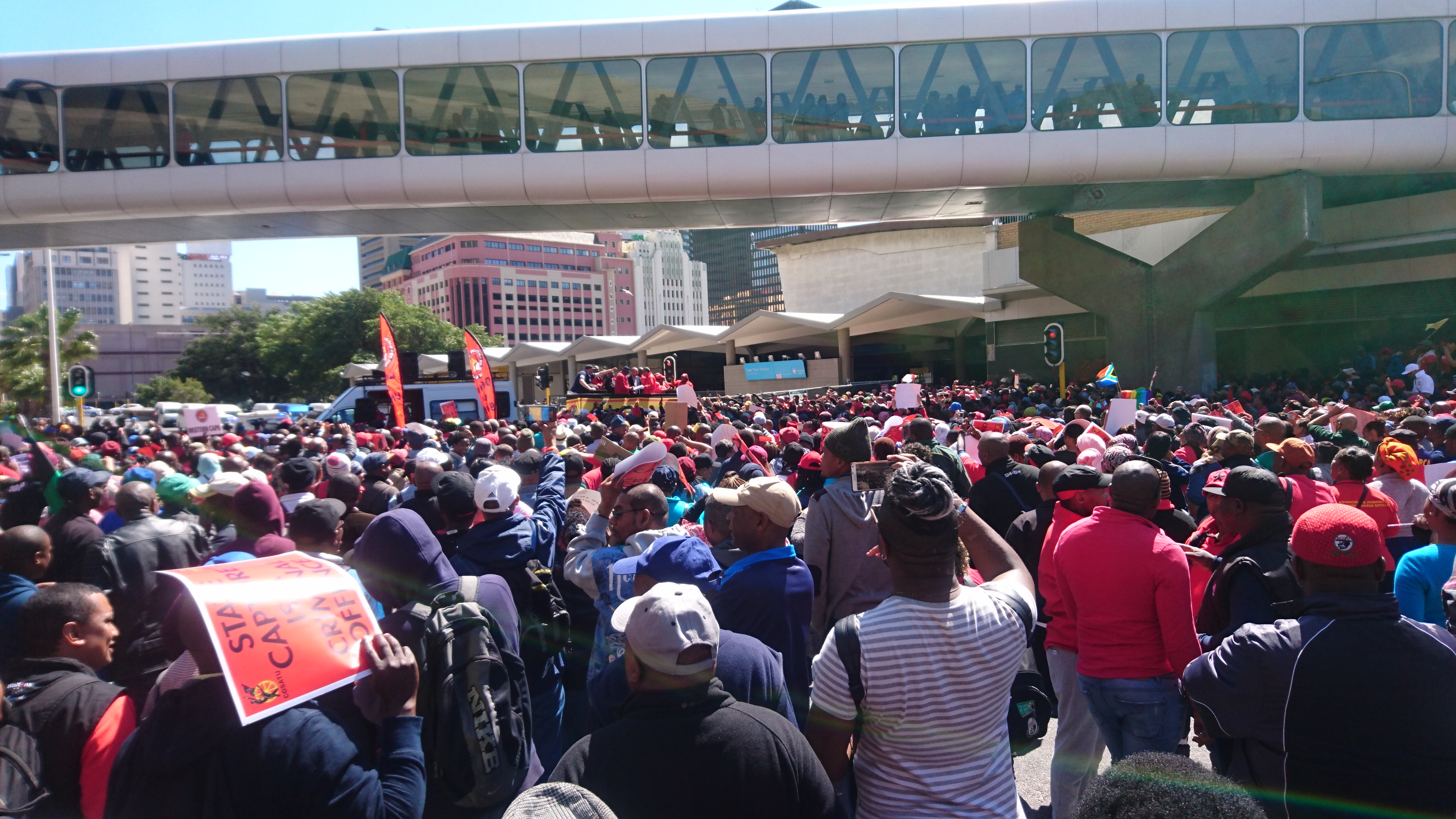
The same logic reached the streets. After Noboa eliminated diesel subsidies in September 2025, Indigenous organizations led weeks of protests against higher transport and production costs. The government deployed soldiers, accused demonstrators of terrorism and froze accounts belonging to Indigenous and environmental groups and leaders, according to Human Rights Watch.
Most demonstrations were peaceful, although some protesters committed violent acts. Human Rights Watch verified footage showing security forces dispersing peaceful crowds and firing weapons and tear gas dangerously. Its investigators also reviewed video involving Efraín Fueres, who died during protests in Imbabura on September 28. The footage showed uniformed security personnel beating two men on the ground, according to the organization. Determining individual criminal responsibility remains a matter for investigation and judicial proceedings.
The government's decision to treat social resistance as a security threat reveals who pays for this version of order: transport workers, rural producers and Indigenous communities already bearing the costs of austerity. The right to demonstrate does not disappear when a president dislikes the demands.

Daniel Noboa in Quito in 2024. Photo: Carlos Silva / Presidency of Ecuador, CC0, via Wikimedia Commons.
A newspaper driven off the presses
The fate of Expreso adds another dimension. Its print edition ended on October 9, 2026. Granasa says regulatory interventions, financial investigations and a collapse in advertising helped make publication unsustainable. Fundamedios recorded the shutdown amid what it calls state pressure, while other press-freedom organizations voiced alarm. The paper continues online.
No one needs to claim that every financial or regulatory measure against a newspaper is illegitimate to recognize the chilling effect of a state repeatedly confronting its critics. The government is entitled to enforce genuine laws; it is not entitled to use that power selectively to punish journalism.
The ballot box imposed a limit
Noboa's 2025 reelection was not simply a sham. European Union observers described election day as well organized and transparent, while raising concerns about his refusal to take a constitutionally required leave of absence and about the blurred line between presidential duties and campaigning. The mission's account is a warning about incumbency advantage, not proof that the vote count was fabricated.
Then, on November 16, 2025, Ecuadorians rejected all four of his referendum proposals. The official count found 61.8 percent opposed his plan for a constituent assembly and 60.82 percent opposed the change that could have permitted foreign military bases. Voters also rejected cutting the size of the National Assembly and abolishing public funding for political parties. Noboa acknowledged the results.
That defeat matters. It showed that the public could still block the president's preferred institutional redesign, and that democratic resistance is not confined to political parties. Ecuadorians were willing to reject both the proposed dilution of legislative representation and the rewriting of constitutional rules.
Security without democracy is no solution
Ecuador does need to confront organized crime, protect its citizens and rebuild public institutions. But militarization and intelligence powers cannot substitute for accountable government, functioning courts, employment and public services. A state that makes enemies of protesters, judges and journalists weakens the very institutions needed to confront criminal power.
Noboa's war on democracy is not a single decree. It is the accumulation of emergency rule, pressure on courts, repression on the streets and mounting hostility toward scrutiny. His opponents have real grounds for warning that the presidency is becoming more powerful while citizens become less protected.
The answer is not to surrender Ecuador to criminal gangs. It is to deny any president the power to turn a struggle against those gangs into a struggle against democracy itself.
Reporting and image sources
Human Rights Watch, World Report 2026: https://www.hrw.org/world-report/2026/country-chapters/ecuador
Human Rights Watch, new security and intelligence laws (June 2025): https://www.hrw.org/news/2025/06/19/ecuador-new-laws-endanger-rights
Human Rights Watch, response to Indigenous protests (October 2025): https://www.hrw.org/news/2025/10/21/ecuador-abusive-response-to-protests
European Union Election Observation Mission, Ecuador 2025 final report: https://www.eeas.europa.eu/sites/default/files/2025/documents/Final%20Report%20EU%20EOM%20Ecuador%202025%20EN%20Total%20-%20Cover.pdf
Ecuadorian National Electoral Council, final 2025 referendum results: https://www.cne.gob.ec/cne-proclamo-resultados-definitivos-del-referendum-y-consulta-popular-2025/
Fundamedios, Expreso print shutdown (October 2026): https://fundamedios.org.ec/alertas/diario-expreso-dejara-de-imprimirse-tras-un-ano-de-presiones-estatales/
Lead photograph: Martin Vasco, protesters and police in Cuenca, September 25, 2025, CC BY-SA 4.0 (https://creativecommons.org/licenses/by-sa/4.0/), via Wikimedia Commons: https://commons.wikimedia.org/wiki/File:Manifestantes_y_policias_en_el_Parque_Calder%C3%B3n_durante_la_Protesta_contra_el_Gobierno_de_Daniel_Noboa_en_Cuenca,_Ecuador.jpg




Comments